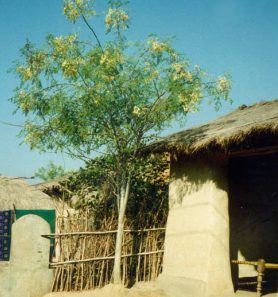
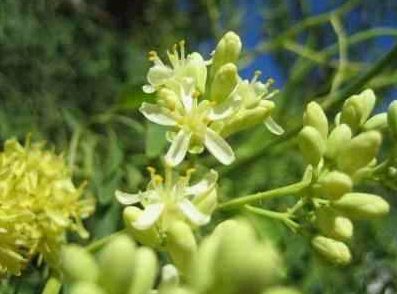
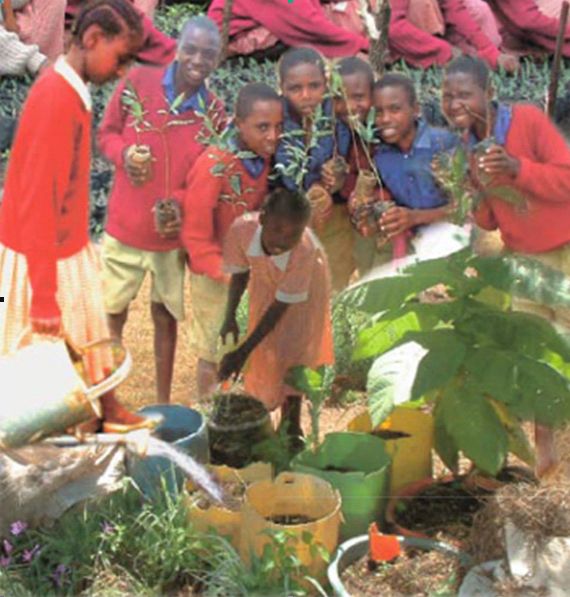
Trees provide a wide range of products (timber, fruit, medicine, beverages, fodder, oils) and lifesupporting services (carbon sequestration, erosion control, soil fertility, shade, beautification).
The very soil we need to grow our food crops, and the health of our water resources and sources, depend on the number of trees we have on the planet, and how healthy they are.
Trees make the soil more fertile, increase soil moisture and reduce erosion.
They also help prevent desertification.
Trees give us shade, also for young plants
Trees act as windbreaks to protect crops from strong winds
they provide us with fruits and animals
Trees supply us with wood that we use to build houses, make furniture, build fences, and burn for heating and cooking.
Trees save money on fuel wood, fodder and stakes
They generate about 40 per cent of the world’s oxygen (in one year, an average tree inhales 12 kilograms (26 pounds) of CO2 and exhales enough oxygen for a family of four for a year.)
Only a quarter of the rainfall occurs on the earth by the evaporation of the oceans. Three-quarters of the precipitation are a product of green
plants. Lehane describes it: "The deforested land has no voice with which it could call for water. The clouds move over it and keep the rain to other, greener areas. "
Forests provide significant income and livelihood options
The World Agroforestry Centre (ICRAF) recommends the planting of deciduous trees where water scarcity is a problem. They consume less water than evergreens during critical periods of water shortage and compete
less with crops.
As the forest grows, trees can be thinned out or pruned and used for timber or fuel. People can collect fruit, seeds, nuts and medicines from the forest.
Birds and animals will return to areas they had left when their habitat is restored
You can grow many food crops—on a large scale to sell, or in a garden to eat at home. These foods provide us with carbohydrates, protein, fats, vitamins and minerals.
they encourage rainwater to sink into the soil instead of causing floods
Fertilizer trees make the soil richer so crops grow better! And thus reduce the need for chemical fertilizers